
July 8, 2026
Every spring, as the snow on the Front Range begins to melt, Denver homeowners face a quiet but serious threat to the lowest level of their homes. Snowmelt and seasonal rain have a way of finding their way into basements, and once water is sitting on your floor, the clock starts ticking.
Understanding basement water damage in Denver, and the critical 48-hour window for responding to it, can be the difference between a quick recovery and a costly mold problem. This guide explains how the water gets in, why speed matters so much, and what to do when it happens.

Denver's spring weather creates a perfect setup for basement flooding. As temperatures rise, accumulated snow melts rapidly, and that water has to go somewhere. When the ground is still frozen or already saturated, it cannot absorb the runoff, so the water travels along the surface and pools against foundations.
From there, it works its way inside. Hydrostatic pressure builds in the soil around the home and pushes water through foundation cracks, gaps around pipes, and porous concrete. Spring rain adds to the volume, and the region's heavy clay soils make drainage even slower, holding water close to the foundation. This combination is exactly why basement water damage in Denver spikes during the spring runoff season, often catching homeowners by surprise.
The single most important thing to understand about a wet basement is how quickly the situation deteriorates. The widely cited 48-hour rule reflects a hard reality: mold can begin to grow within one to two days of materials becoming wet. Once it takes hold, the problem expands from a cleanup job into a remediation job.
Water also does not sit still. It wicks into drywall, soaks into wood framing, saturates carpet padding, and seeps under flooring, spreading the damage well beyond the visible puddle. The longer it stays, the deeper it penetrates and the more it costs to fix. Acting within that 48-hour window dramatically reduces the chance of mold growth and limits how far the damage spreads, which is why fast response is at the heart of dealing with basement water damage in Denver.
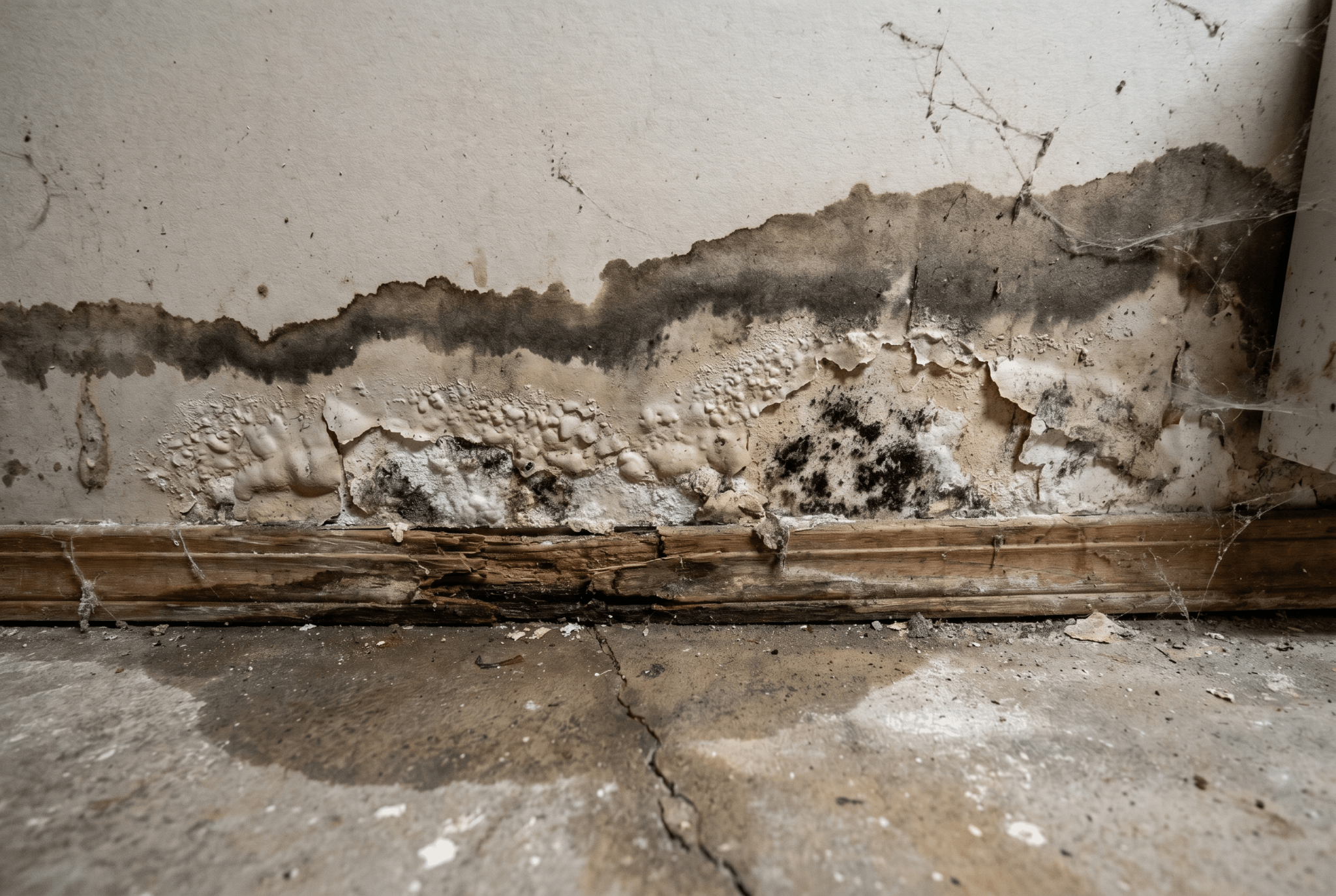
When you discover water in your basement, a calm and methodical response protects both your safety and your recovery. Taking the right actions in the first hour sets up everything that follows. Here are the key steps to take right away.
Moving through these steps without delay gives you the best possible footing for the cleanup ahead.
Once professionals arrive, they follow a proven sequence designed to remove the water and fully dry the structure before mold can establish itself. Surface cleanup alone is never enough, because moisture hides inside materials. A thorough restoration addresses what you can see and what you cannot.
The team begins with extraction, using powerful pumps and vacuums to remove standing water fast. Next comes drying and dehumidification, where industrial air movers and dehumidifiers pull moisture out of floors, walls, and the air over a period of days, with readings monitored to confirm progress. Affected materials that cannot be saved are removed, and the area is cleaned and treated to discourage microbial growth. You can read more about this work on our water damage restoration page. If mold has already begun to appear, remediation is added to the plan, as described on our mold removal page.

Recovering from one flood naturally raises the question of how to avoid the next one. While no home is completely flood-proof, several practical measures significantly reduce the risk of basement water damage in Denver, especially heading into future runoff seasons.
Combining several of these measures gives your basement the strongest defense against the next heavy melt or storm.
When water is in your basement, every hour matters, and the 48-hour window does not wait for business hours. Prime Environmental offers around-the-clock emergency water extraction and works directly with your insurance company to keep your recovery on track.
Fixing basement water damage starts with removing the standing water quickly, then drying the structure thoroughly to prevent mold. Professionals use pumps to extract water and industrial air movers and dehumidifiers to dry floors, walls, and the air over several days. Damaged materials that cannot be salvaged are removed, and the area is cleaned and treated. Acting within the first 48 hours gives the best chance of limiting the damage and avoiding mold.
Drying a flooded basement typically takes around three to five days, though the exact time depends on how much water was present, the materials affected, and the humidity. Professional equipment speeds the process considerably compared to letting a space air-dry on its own. Technicians take moisture readings to confirm the structure is fully dry rather than just dry on the surface. Rushing this step risks trapping moisture that later leads to mold.
The cost of addressing basement moisture varies widely based on the severity of the damage, the size of the area, and the cause. Minor cleanups are far less expensive than major floods that require material removal and reconstruction. Prevention measures like waterproofing or a sump pump add cost but can save much more down the road. The most accurate way to know is to have a professional assess your specific situation and provide an estimate.
Mold can begin to grow within 24 to 48 hours of materials becoming wet, which is the basis of the well-known 48-hour rule. Warm, humid conditions accelerate this growth, and once mold establishes itself it spreads quickly and becomes harder to remove. This is why fast water extraction and thorough drying are so important after a flood. Responding quickly is the single best way to prevent a mold problem.
Some water damage can be reversed with prompt drying, while damage that has gone untreated for too long may be permanent. Warning signs of lasting damage include warped or buckled flooring, crumbling drywall, persistent musty odors, and visible mold growth. The longer materials stay wet, the more likely they will need replacement rather than restoration. A professional assessment can determine what can be saved and what must be replaced.
Our team of certified professionals is always ready to protect your home or business. Contact us today and get a FREE estimate.
.svg)

.svg)
.avif)