
If you own an older home in the Denver metro area, the space beneath your floors may be quietly working against you. Damp, unfinished crawl spaces are one of the most common sources of moisture, musty air, and mold in Colorado homes.
Crawl space encapsulation in Denver has become a go-to solution for homeowners who want to protect their structure, improve their air, and lower their energy costs. This guide walks you through what the process involves, why local conditions make it so important, and how professional mold removal fits into the picture.
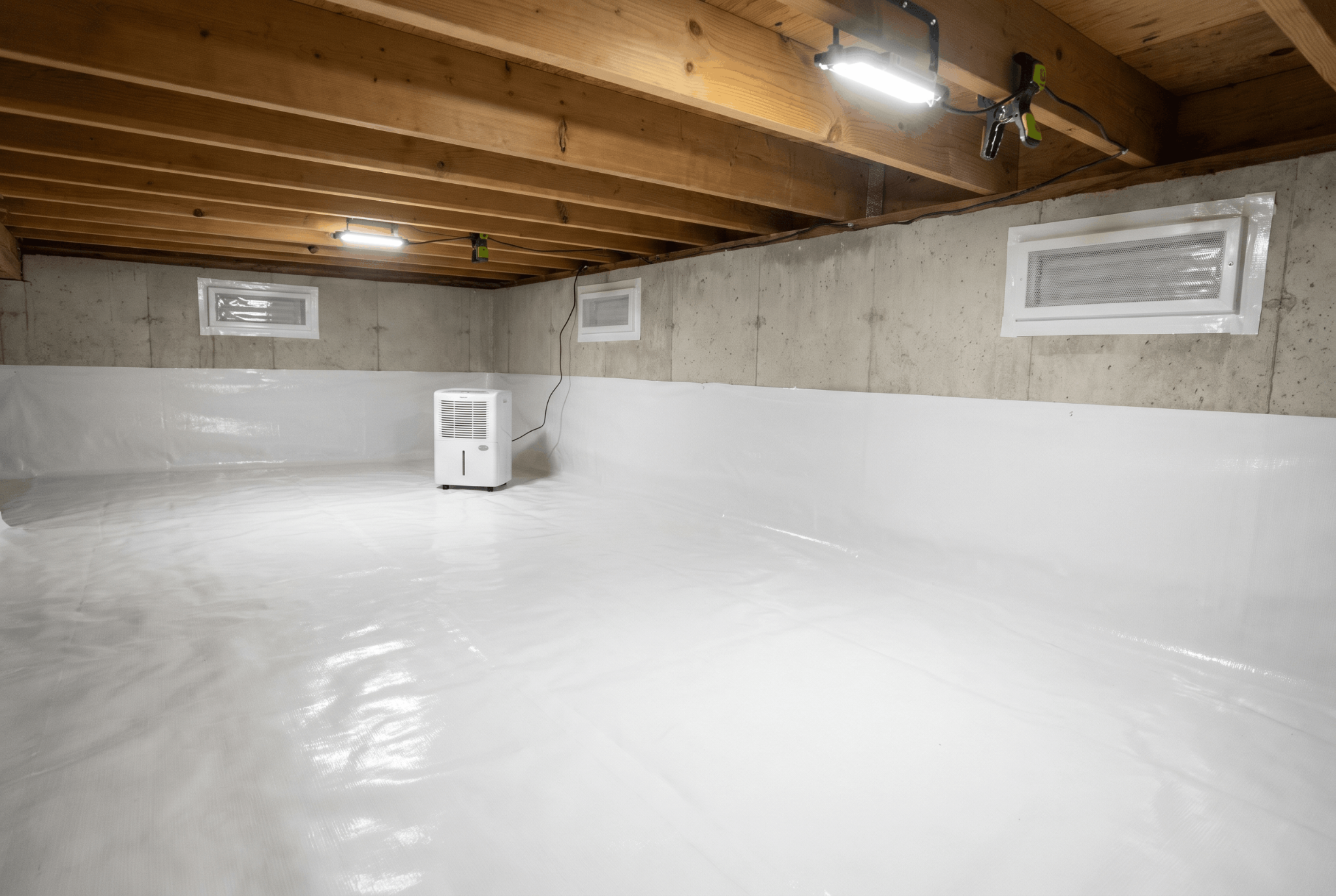
At its core, encapsulation is the process of sealing your crawl space off from outside air, ground moisture, and humidity. Instead of leaving the area exposed to bare soil and open vents, the space is fully enclosed and controlled. A proper crawl space encapsulation in Denver typically combines three key elements that work together.
The first is a heavy-duty vapor barrier, a durable polyethylene liner laid across the floor and up the foundation walls to block moisture rising from the soil. The second is sealing, which closes off vents, gaps, and penetrations so outside air and pests can no longer get in. The third is dehumidification, where a dedicated unit keeps relative humidity at a safe, stable level year-round.
Because that same trapped moisture is also what fuels mold growth beneath a home, many encapsulation projects include a related mold remediation assessment as part of the plan, and the EPA offers detailed guidance on mold and moisture control worth reviewing beforehand. Sealing a crawl space can also change how soil gases move through the structure, which is why some Denver homeowners pair encapsulation with radon testing; the EPA's radon resource center explains why this matters given the region's geology.
The vapor barrier is what separates a true encapsulation from a quick patch job. Bare earth constantly releases water vapor, and without a sealed liner that moisture migrates straight into your insulation, framing, and living space. A correctly installed barrier creates a clean, dry boundary that the rest of the system depends on.
Many homeowners assume Colorado is too dry to have a moisture problem. The reality below the floor is different. Denver's freeze-thaw cycles repeatedly push and pull water through soil and foundations, opening tiny cracks that let dampness seep into the crawl space. When temperatures swing from freezing nights to warm afternoons, condensation forms on cold surfaces underground.
The region's heavy clay soils make matters worse. Clay holds water and expands when wet, pressing against foundations and slowing drainage. That trapped moisture has nowhere to go but up, into the wood, insulation, and air your family breathes. This combination is exactly why crawl space encapsulation in Denver addresses a problem that a dry surface climate hides from plain view.
Crawl space problems rarely announce themselves directly, because the source is out of sight. Instead, the symptoms show up in your living areas. Knowing what to look for helps you act before minor dampness turns into structural or health concerns.
If you notice one or more of these signs, it is worth having the space professionally inspected before scheduling any work.
In older Denver homes, this inspection is also a good opportunity to rule out other legacy hazards. Pipe wrap and insulation installed before the 1980s can contain materials that require professional asbestos abatement, and homes built before 1978 may still have lead-based paint on framing, trim, or subfloor coatings, which should be addressed through proper lead abatement before any encapsulation work begins.
A thorough project does more than lay down plastic. When mold is already present, removal has to happen first so it does not become sealed in. Here is how a complete crawl space encapsulation in Denver generally unfolds from start to finish.
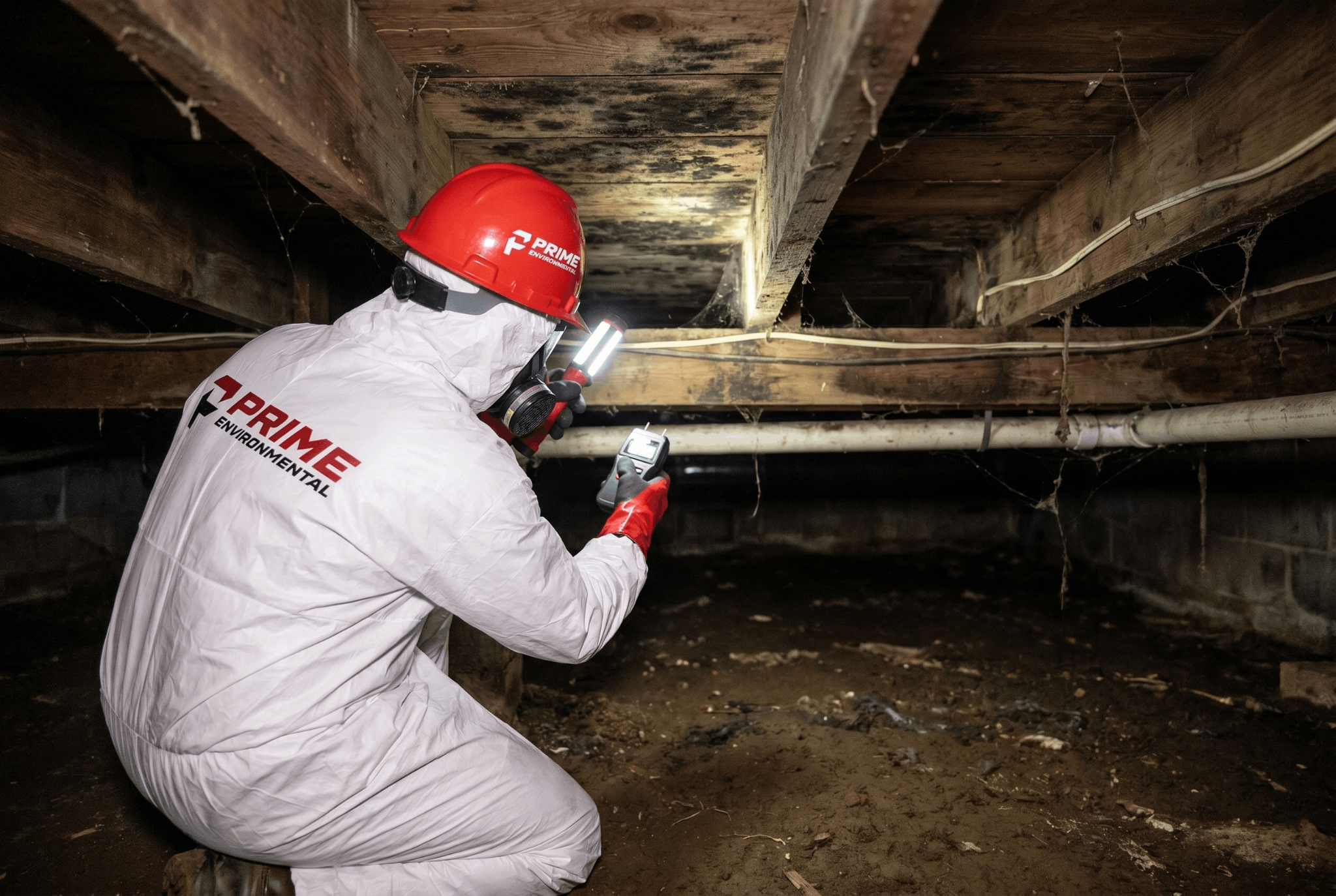
The payoff from encapsulation reaches well beyond the crawl space itself. Once the area is sealed and controlled, the effects ripple through the whole house in ways homeowners notice month after month.
Lower energy bills are often the first benefit people see. When your crawl space is no longer leaking damp, unconditioned air, your heating and cooling system runs more efficiently. Healthier indoor air follows close behind, since the musty, spore-laden air that once rose into your home is replaced by a dry, controlled environment. Finally, your structure is protected. By keeping moisture away from wood framing and insulation, encapsulation helps prevent rot, pest activity, and the slow decay that undermines a foundation over time.

Your home's comfort, air quality, and structural health start from the ground up. If you have noticed musty odors, rising humidity, or visible mold, now is the time to act. Our certified team is ready around the clock to help you remove hazards and restore peace of mind.
The main drawback is the upfront cost, since a quality encapsulation requires professional labor, durable materials, and often a dehumidifier. The system also needs occasional maintenance, such as checking the dehumidifier and inspecting the barrier over time. In rare cases, if the space is sealed without addressing existing moisture or mold, problems can be trapped inside. This is why proper assessment and remediation beforehand are so important.
A professionally installed vapor barrier typically lasts 15 to 20 years or more, depending on the thickness of the material and the conditions of the space. The dehumidifier and any mechanical components have their own lifespans and may need servicing or replacement sooner. Quality installation makes a major difference in longevity. With routine inspections, many homeowners get decades of reliable performance from their system.
Most homes with an accessible crawl space are good candidates for encapsulation, including older Denver properties. The exact approach depends on the layout, the moisture source, and whether existing damage or mold needs to be addressed first. A professional assessment determines what is feasible for your specific structure. In homes with serious water intrusion, additional drainage solutions may be recommended alongside encapsulation.
Encapsulation alone does not create radon, but sealing a space can change how gases move through it. A properly designed system accounts for this and can actually be paired with radon mitigation to vent the gas safely outdoors. Professional installers understand local conditions and can test and plan accordingly. If radon is a concern in your area, mention it during your assessment so it can be addressed.
For most Denver homeowners dealing with moisture, mold, or high humidity, encapsulation is well worth the investment. It protects the structure, improves indoor air quality, and often reduces energy costs over time. It can also support a healthier living environment and add value when selling your home. The best way to know if it is right for you is a professional assessment of your specific crawl space.
Our team of certified professionals is always ready to protect your home or business. Contact us today and get a FREE estimate.
.svg)

.svg)
.avif)