
November 18, 2026
Prime Environmental
In a Denver home built before about 1980, the white or gray wrap on old heating pipes, the insulation on an old boiler or furnace, and loose gray-brown vermiculite in the attic can all contain asbestos. Leave them alone, have an independent inspector test anything the heating work will touch, and plan licensed abatement before the furnace, boiler or insulation job starts.
November is when these materials get disturbed. Old furnaces and boilers get replaced, a cold snap splits a pipe, and owners head into the attic to add insulation before the worst of winter. Each of those jobs can break into material that has sat quietly for fifty years.
This guide covers where asbestos hides in an older home's heating system and attic, how to recognize it, why the test comes before the work, and what abatement involves when it is needed.
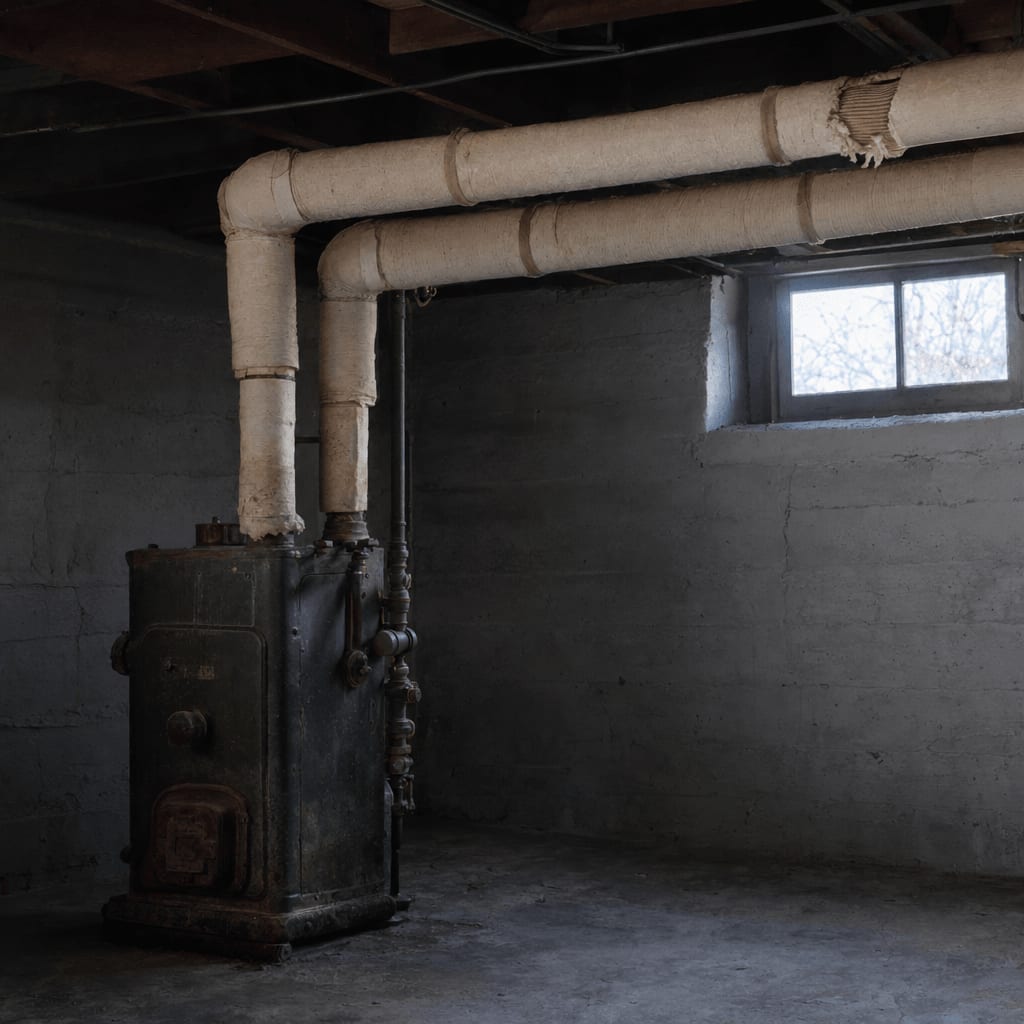
Asbestos was used for decades because it resisted heat, which made it a natural fit around boilers, furnaces and hot pipes. Builders also poured vermiculite into attics as loose insulation. Intact and undisturbed, these materials generally stay put. The risk starts when they are cut, crushed, torn or swept, because that releases fibers too small to see.
Heating-season work does exactly that:
The contractor doing the heating job may not stop to ask what the old material is. That question is yours to settle before work begins.
Most of what an owner will run into falls into three groups. You cannot confirm asbestos by looking, but knowing what to watch for tells you when to stop and get a test.
Asbestos pipe insulation in older homes often looks like a white or gray wrap around the heating pipes, sometimes with a corrugated, cardboard-like layer you can see at a torn end. At bends and joints it may be a hard, plaster-like cap. It is most common on steam and hot water heating pipes in basements and crawl spaces, and it is often painted over or covered with cloth tape.
Old boilers were often covered in a thick, hard white insulation, sometimes under a canvas or metal jacket. Older furnaces and the ducts near them can hold asbestos in their insulation, in the gaskets around doors and access panels, and in the wrap or tape at duct joints. Anything that crumbles when touched, or is already damaged, deserves extra caution.
Vermiculite attic insulation looks like small, lightweight, pebble-like pieces, usually gray-brown or gold, often with shiny flecks. It was poured loose between the attic joists. Much of the vermiculite sold in the United States came from one mine near Libby, Montana, that was contaminated with asbestos, and it was sold under the Zonolite name among others. The EPA advises homeowners who find vermiculite insulation to assume it may contain asbestos, leave it undisturbed, and keep stored items and people out of the attic until it has been dealt with. The EPA's asbestos information pages explain this guidance.
The safest first step with any of these materials is to do nothing to them. Do not pull back a piece of pipe wrap to see what is under it, do not sweep or vacuum crumbled insulation, and do not move vermiculite to get a look at the joists. A small sample taken by hand is exactly the kind of disturbance you are trying to avoid.
The test belongs to an independent, Colorado-certified asbestos inspector. The inspector takes samples safely, sends them to an accredited lab, and gives you a report that shows which materials contain asbestos. Under Colorado's rules, the company that removes asbestos does not test it, and the air test that clears the space at the end is done by an independent specialist too. Our guide to how asbestos testing works in Denver explains what an inspection involves and what each result means.
Get the inspection before the heating contractor's start date, not after. A report in hand lets you plan the abatement, the heating work and the insulation job in the right order, instead of stopping a project halfway.
When the inspection report shows asbestos in material the work will disturb, a licensed abatement team deals with it first. In Colorado, asbestos abatement is regulated by the Colorado Department of Public Health and Environment, and the work follows the state's asbestos rule. A typical job follows the same order:
Our asbestos abatement service page explains how Prime Environmental handles this work in Denver homes and buildings.
Heating work rarely waits for a convenient moment, so it helps to plan before something breaks.
If you are planning a wider remodel, our guide to asbestos in old Denver homes covers the other places asbestos turns up, and our guide to what asbestos removal costs in Denver explains what drives the price and when insurance may help.
Planning heating or insulation work in an older home? Call Prime Environmental at (303) 720-5111 for asbestos abatement anywhere in the Denver metro.
These are the questions Denver owners ask most often when old pipe wrap or attic vermiculite turns up.
You cannot tell by looking. White or gray wrap on older heating pipes, especially with a corrugated paper layer or hard caps at the bends, is a common asbestos material, but only a lab test of a sample taken by an independent, certified inspector can confirm it. Until then, treat it as if it does and leave it alone.
Pipe wrap that is intact and not being disturbed generally does not release fibers. It becomes a concern when it is damaged, crumbling or about to be cut for a repair or a new boiler. If it is torn or falling apart, keep people out of the area and have it inspected.
No. The EPA advises against disturbing vermiculite that may contain asbestos and recommends leaving removal to trained professionals. Raking it, bagging it or vacuuming it with a household vacuum can spread fibers through the attic and into the rest of the house.
Blowing or laying new insulation over vermiculite means working in it and disturbing it, so it is not a safe shortcut. Have the vermiculite tested first. If it contains asbestos, plan its removal before the new insulation goes in.
Any asbestos the replacement will disturb, on the old unit, its pipes or its ducts, should be removed first, with the space cleared by an independent air test before the heating contractor starts. Planning the inspection early keeps that from pushing your new heat into the coldest weeks.
Our team of certified professionals is always ready to protect your home or business. Contact us today and get a FREE estimate.