
When water floods into your home, the clock starts immediately — and one of the biggest risks in those first hours is one you can’t see yet. Standing water and soaked materials create the exact conditions mold needs to take hold, often within 24 to 48 hours. Fast, correct action in that window is what stands between a manageable cleanup and a water damage mold removal project weeks later. This guide walks you through what to do the moment water appears, and where certified environmental remediation fits in.
Whether the source is a burst pipe, an overflowing appliance, or spring runoff pushing through the foundation, those first 24 hours are decisive. At Prime Environmental, we work alongside Denver-area homeowners and restoration companies after the water is out — finding and removing mold, and safely handling any asbestos or lead disturbed by the water so your home is put back together clean and compliant. Here’s how to protect your property in the critical window, how water damage is categorized, and when to call a certified remediation team.
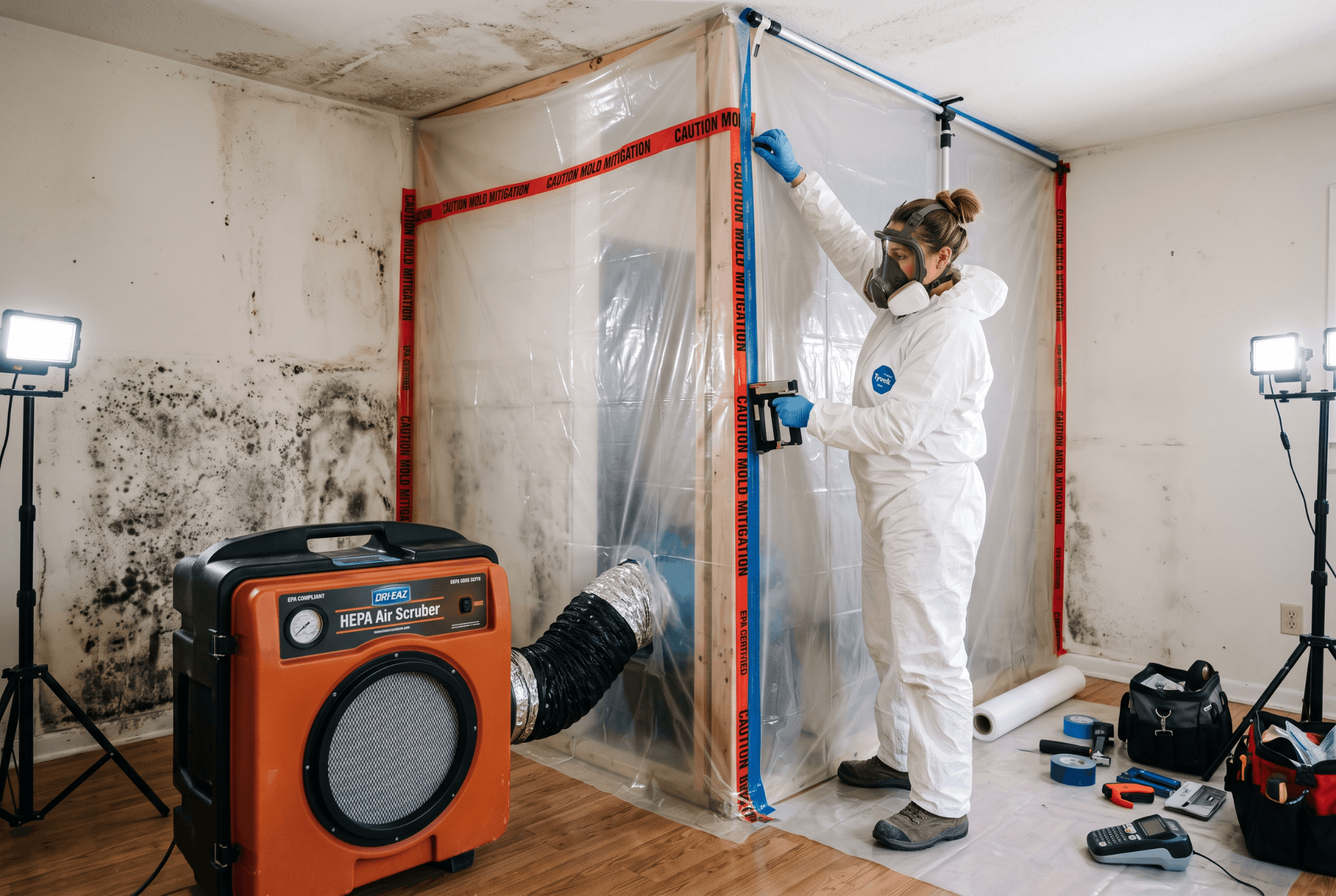
The opening hours of a water event set the tone for everything that follows. Taking a few decisive steps before help arrives protects your safety, limits the damage, and preserves your insurance claim — and it dramatically lowers the odds of a mold problem taking root.
Your first priority is always safety. Standing water can hide serious electrical hazards, so if water is near outlets, appliances, or your electrical panel and you can reach the breaker safely, cut the power to affected areas. Avoid walking through water when the source or its cleanliness is uncertain, and keep children and pets clear of the area entirely.
Next, stop the water at its source if you can do so safely. For a burst pipe or a supply-line failure, that usually means shutting off the main water valve — every homeowner should know where theirs is before an emergency ever happens. For weather-driven intrusion, containing the entry point as much as possible helps limit the spread while help is on the way.
Finally, document everything before cleanup begins. Photograph and video the standing water, the affected rooms, and any damaged belongings from multiple angles. This record is invaluable when you file your claim. It’s also worth reviewing the EPA’s guidance on mold and moisture control while you wait, since preventing secondary mold damage is largely about how quickly the moisture is controlled. Thorough documentation up front prevents disputes later and supports a smoother, faster claim.
Once safety is handled and the source is stopped, a few simple actions help limit damage and slow mold growth before a professional team arrives. If it’s safe to do so, lift curtains and fabric off wet floors, move small furniture and valuables to a dry area, and place aluminum foil or wood blocks under furniture legs to prevent staining and wicking. Remove area rugs from wet carpet so they don’t bleed color, and open windows only if outdoor conditions are drier than inside. Avoid using household fans on visibly contaminated water, since that can aerosolize bacteria, and never use a regular vacuum to remove water. These small steps buy time — but they’re a bridge to professional help, not a substitute for it.
Not all water is equal, and understanding the differences matters for both your health and your mold risk. The industry classifies water damage into three categories based on contamination level, and that category drives every decision about what can be saved and how the cleanup must proceed.
Category 1 is clean water from a sanitary source, such as a broken supply line or an overflowing sink with no contaminants. It carries the lowest health risk, but it doesn’t stay clean for long — left standing, it degrades into a higher category within a day or two. Category 2, often called gray water, contains some contamination and comes from sources like washing machine overflow or a dishwasher discharge. It can cause illness if ingested and requires more careful handling. Category 3, known as black water, is grossly contaminated and may contain sewage, floodwater, or harmful bacteria. It poses a serious health hazard and demands full protective equipment and strict sanitizing protocols.
The reason categories matter so much is that they determine what’s salvageable — and how likely mold is to follow. Materials soaked by clean water can often be dried and saved, while the same materials exposed to black water usually must be removed and replaced. Time also degrades categories, which is why prompt response protects more of your property. Because standing water so reliably leads to mold when drying is delayed, professional mold removal is often the essential next step once the water itself has been cleared.
Recovering from a water event usually involves two phases handled by different specialists. Understanding how they fit together helps you coordinate the right help in the right order.
The first phase is water removal and structural drying, typically performed by a water-restoration company: extracting standing water, mapping hidden moisture, and running air movers and dehumidifiers until the structure is dry. This is critical work, and it’s the reason Prime Environmental partners with restoration companies rather than duplicating it.
The second phase is where the environmental hazards are addressed — and it’s where a certified remediation team like Prime comes in:
This coordinated approach is what ensures a water event doesn’t leave a hidden mold or contamination problem behind a wall that looks dry on the surface.

A significant part of recovering from water damage happens on paper, in coordination with your insurance company. Handled well, this side of the process reduces stress and speeds your recovery.
The documentation you captured in the first 24 hours becomes the foundation of your claim. From there, clear communication between the remediation team and your adjuster keeps everyone aligned on the scope of the damage and the work required. Detailed, itemized estimates that match industry-standard formats make it easier for adjusters to review and approve the work without back-and-forth delays.
At Prime Environmental, we work directly with insurance companies and adjusters, providing the documentation and Xactimate-compatible estimates that streamline claims from the first call to final clearance. That partnership means you spend less time refereeing between contractors and your insurer, and more time getting your home back to normal. When a water event in an older home disturbs pre-1980 building materials, we also coordinate the appropriate asbestos abatement so the work stays safe and compliant.
When it comes to mold and environmental hazards after water damage, response time is everything. The value of a fast, local team isn’t just convenience — it’s the difference between catching mold early and facing a whole-home contamination problem.
Mold doesn’t keep business hours, which is why fast availability matters so much. A team that can reach your home quickly assesses the risk while materials are still relatively fresh and gets containment in place before spores have time to spread deep into the structure. Every hour of delay expands the affected area and raises the risk of secondary damage.
Serving communities across the Denver metro and the wider Front Range — including Boulder, Aurora, Lakewood, and Fort Collins — means having crews positioned to respond fast when it counts. For homeowners, the takeaway is simple: the moment water is cleared, having your home assessed for mold and hidden hazards protects far more than waiting to see what surfaces. Rapid response paired with certified remediation is the surest way to limit both cost and disruption.
While the first 24 hours are about response, the weeks after cleanup are the right time to reduce your risk of a repeat. A few targeted measures make a real difference across the Front Range: keeping gutters and downspouts clear so snowmelt and rain drain away from the foundation, maintaining proper grading so the soil slopes away from the home, testing and servicing your sump pump before spring runoff arrives, and knowing — and labeling — your main water shutoff so anyone in the household can act fast. Insulating vulnerable pipes ahead of cold snaps also prevents the burst-pipe failures that drive so many winter claims. None of these steps eliminate risk entirely, but together they buy you time and margin the next time water tries to find a way in.
Water damage only gets worse with time — and mold can take hold within a day. If your home has flooded from a burst pipe, an appliance failure, or spring runoff, having it assessed quickly protects your property, your belongings, and your health. Our EPA-certified team finds hidden mold, removes it safely, handles any asbestos or lead the water uncovered, and documents everything for your claim.
📞 Call Prime Environmental at (303) 720-5111 for water damage mold removal and environmental remediation across the Front Range.
Mold can begin developing remarkably fast — often within 24 to 48 hours of materials becoming wet, given the right temperature and an organic surface to feed on. That short window is exactly why speed matters so much after a water event: the faster standing water is removed and the structure is dried, the less opportunity mold has to establish. Once growth has started, professional assessment and containment become important to keep it from spreading through wall cavities and the HVAC system.
What must be discarded depends largely on the category of water and how long materials were saturated. Porous items soaked by contaminated water — such as carpet padding, mattresses, upholstered furniture, and drywall exposed to sewage or floodwater — typically have to be thrown out for health reasons. Items touched only by clean water and dried quickly can often be saved. A professional team helps you sort salvageable belongings from those that pose a risk, so you’re not discarding more than necessary or keeping something hazardous.
Hidden mold is usually located by following the moisture and the clues it leaves behind — musty odors, staining, warped or bubbling paint, and elevated humidity in a given area. Trained professionals use their knowledge of how water travels through a structure to pinpoint likely growth without unnecessary demolition. When confirmation of the type or extent is needed, that analysis is handled by an independent third-party laboratory, keeping the assessment objective and separate from the remediation work.
It often depends on the source of the water. When mold results from a sudden, accidental, covered event — like a burst pipe — many policies will cover the resulting remediation, though coverage and mold sublimits vary from policy to policy. Mold traced to long-term, unaddressed leaks or maintenance issues is more likely to be excluded. Thorough documentation from the first 24 hours, plus clear itemized estimates, gives your claim the best chance. Prime Environmental works directly with adjusters and provides the records needed to support the claim.
Our team of certified professionals is always ready to protect your home or business. Contact us today and get a FREE estimate.
.svg)

.svg)
.avif)