
Attic mold removal in Denver almost always starts in a space no one thinks about: the attic is one of the most overlooked parts of a home, and that is exactly why it is such a common place for mold to take hold unnoticed. Poor ventilation, a small roof leak, or a bathroom fan venting into the attic instead of outside can create the damp, still conditions mold thrives in, often for months before anyone climbs up to look. Understanding attic mold removal in Denver starts with understanding how the problem develops out of sight and why it affects far more than just the attic itself.
Because warm, moist air rises and collects at the top of a house, the attic is uniquely vulnerable to the conditions that feed mold. And because air moves downward through a home as well, mold growing on the roof sheathing overhead can quietly affect the air your family breathes in the living spaces below. At Prime Environmental, we help Denver homeowners identify attic mold, remove it safely, and, most importantly, correct the ventilation and moisture problems that caused it. This guide explains why attics grow mold, how it affects the whole home, the warning signs to watch for, and what professional removal actually involves.
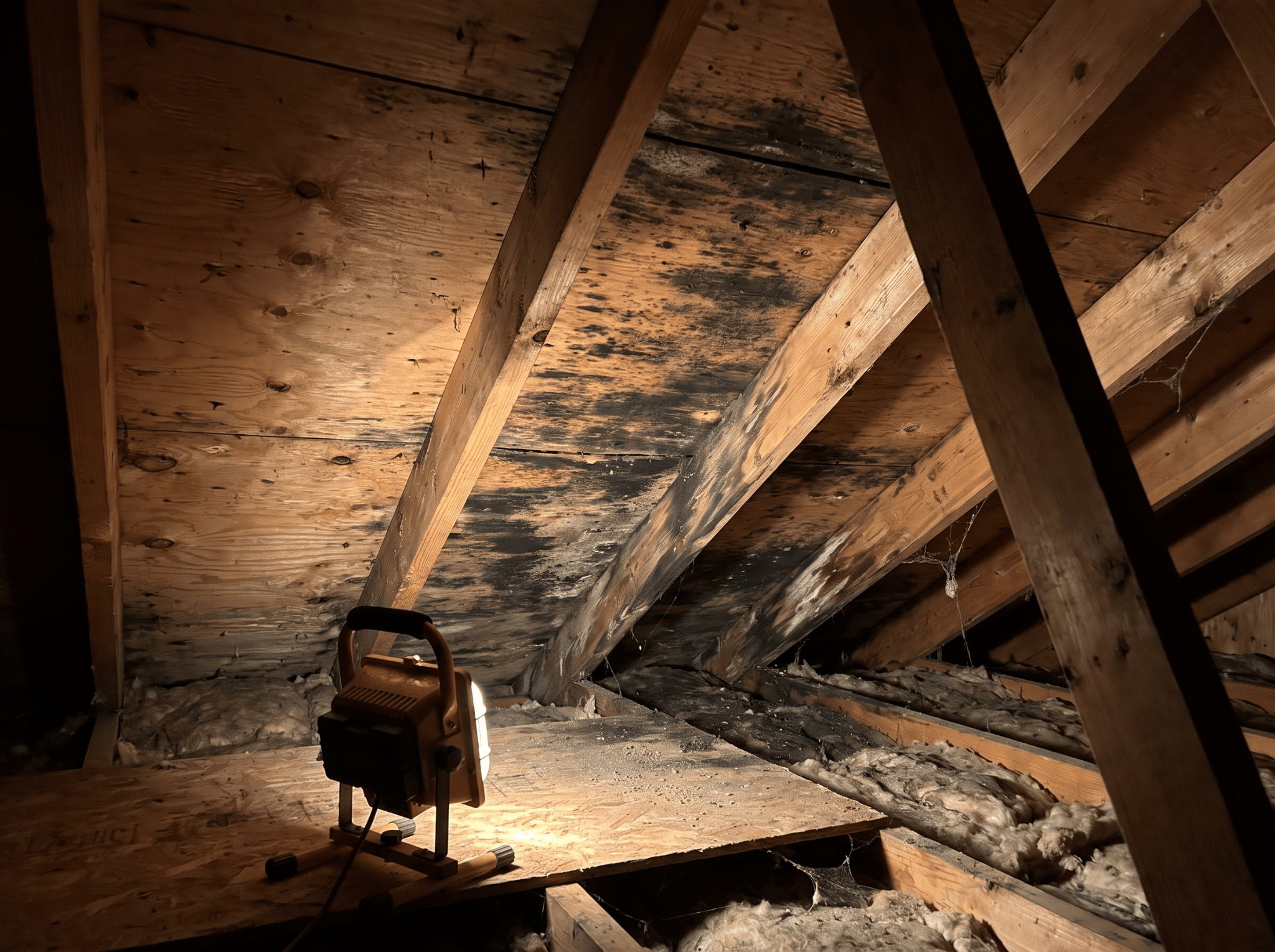
Attic mold almost always traces back to a moisture problem, and in Denver homes it usually comes from one of three sources. The first is poor or blocked ventilation. An attic is designed to breathe, with intake vents low along the eaves and exhaust vents near the ridge allowing air to flow through and carry moisture out. When that airflow is blocked, by insulation covering the soffit vents, by too few vents, or by a poorly designed roof, humid air stagnates and condenses on the cold underside of the roof deck.
The second common source is a roof leak. Even a slow, minor leak around a vent boot, a chimney flashing, or a few worn shingles can introduce enough water to soak the sheathing and insulation over time. Because the water enters high in the structure and the attic is rarely inspected, these leaks often go undetected until the resulting mold has spread across a significant area of the decking.
The third, and one of the most common in older Denver homes, is a bathroom or kitchen exhaust fan that vents into the attic rather than to the outside. Every shower or boiling pot then pumps warm, humid air directly into the attic, where it condenses and feeds mold growth. It is a surprisingly frequent mistake, and it turns a space that should stay dry into a moisture generator every single day the home is used.
Ventilation is the attic's primary defense against moisture, and when it fails, mold follows. Proper airflow moves humid air out before it can condense; blocked or insufficient venting lets that moisture settle on the roof deck instead. In Denver's climate, where warm indoor air meets a cold roof in the colder months, that condensation can be substantial. Restoring correct intake-and-exhaust ventilation is therefore not just a repair, it is the foundation of keeping mold from returning.
An exhaust fan that terminates in the attic rather than outside is one of the most common hidden causes of attic mold. The fan does its job of pulling humid air out of the bathroom, but instead of expelling it from the home, it dumps that moisture into the attic day after day. The result is persistent dampness concentrated right above the bathroom, and mold that keeps coming back until the duct is rerouted to vent fully outdoors.
It is tempting to think of attic mold as a contained, out-of-sight problem, but the physics of how air moves through a house tell a different story. Mold in the attic can influence the air quality of the entire home, which is why prompt mold removal matters even when the growth is confined to a space no one lives in.
Homes experience what is known as the stack effect: warm air rises and escapes through the upper levels and attic, and as it does, it draws replacement air upward from the lower floors. This continuous upward movement means air from the attic does not simply stay put. Mold spores and the musty compounds mold produces can be pulled into the living spaces below through gaps around light fixtures, attic hatches, and ductwork, subtly degrading the air the household breathes.
This is why attic mold is not only a structural concern but a health and comfort one. Family members may notice musty odors, increased allergy symptoms, or respiratory irritation without ever suspecting the attic as the source. Addressing the mold at its origin, rather than masking symptoms downstairs, is the only way to genuinely restore the home's air quality, which is a central reason professional removal focuses on eliminating the growth rather than simply cleaning what is visible.
Because attics are rarely visited, the warning signs of mold often show up indirectly, elsewhere in the home. Knowing what to look for, both in the attic and below it, helps catch the problem before it spreads across the roof structure. Common signs of attic mold include:
If any of these signs are present, a professional assessment of the attic is the safe next step. Confirming the type and extent of mold is handled by an independent third-party laboratory when testing is warranted, keeping that evaluation objective and separate from the removal work itself.
Removing attic mold correctly means addressing both the growth and the moisture source that created it, in a sequence built to protect the rest of the home. The attic mold removal process below is the order a professional project typically follows:
Following this sequence ensures the mold is genuinely eliminated rather than temporarily cleaned, and, critically, that the moisture problem behind it is solved so the growth does not simply return the next humid season.
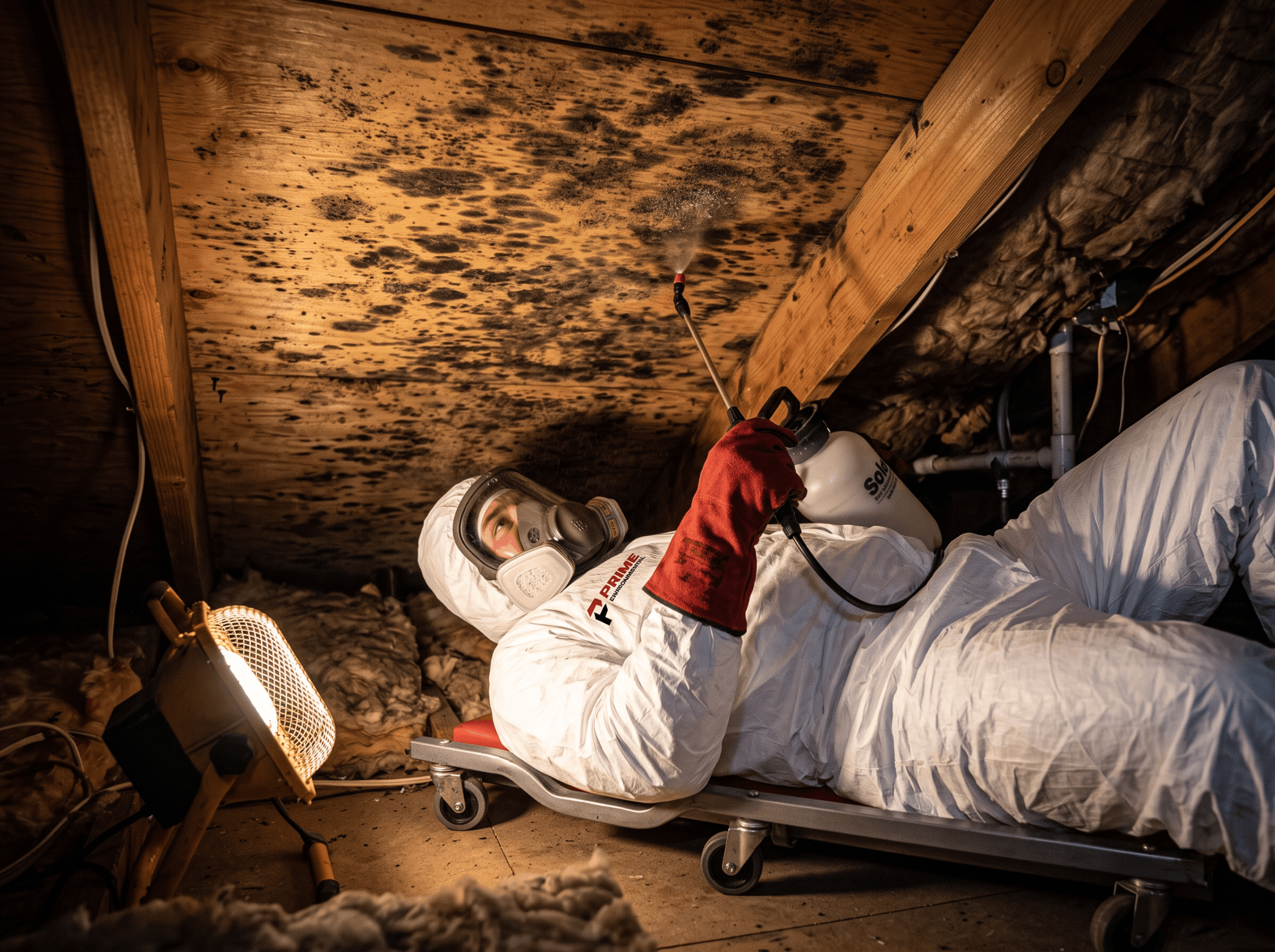
Handling attic mold correctly protects far more than the plywood overhead. Thorough mold remediation safeguards the home's air, structure, and efficiency in ways a quick surface cleaning cannot. The benefits include:
Attic moisture is often part of a larger pattern of humidity and hidden growth in a home. When dampness is affecting more than the attic, a crawl space, a basement, or wall cavities, addressing it comprehensively through professional mold remediation is what keeps a home's air genuinely healthy for the long term.
📞 Call Prime Environmental at (303) 720-5111 to request an attic mold assessment for your Denver home, or explore our Denver mold remediation services and full range of environmental remediation services.
It can. Homes experience the stack effect, where warm air rising through the house draws air upward from lower floors and out through the attic. That airflow can carry mold spores and musty odors from the attic down into living spaces through gaps around light fixtures, the attic hatch, and ductwork. So even though the mold itself stays in the attic, its effect on indoor air quality is felt throughout the home, which is why prompt removal matters even for out-of-sight growth.
No. Painting over mold, even with mold-resistant or stain-blocking paint, only hides it temporarily. The mold remains alive beneath the paint, continues to grow, and will eventually bleed back through, because the moisture feeding it has not been addressed. Effective removal means physically eliminating the mold, treating the surface, and, most importantly, correcting the ventilation or leak that created the damp conditions. Paint is a cosmetic cover-up, not a solution, and it can make later remediation more difficult.
Mold on roof sheathing is treated by physically removing the growth from the wood and then applying an antimicrobial treatment to the surface, all within a contained work area so spores don't spread into the home. Because the sheathing is structural, the goal is to clean and treat it rather than replace it wherever possible. Just as important, the underlying moisture source, poor ventilation, a leak, or a fan venting into the attic, is corrected, since sheathing mold will simply return if the damp conditions remain.
The timeline depends on how far the mold has spread and what is driving it. A contained area with a clear, easily corrected moisture source may be handled in a day or two, while extensive growth across the decking, wet insulation that must be removed, or ventilation work to reroute fans and add vents can extend the project. Because correcting the moisture source is part of a lasting fix, the full scope includes more than just cleaning. A professional assessment gives you an accurate timeline for your specific attic.
Our team of certified professionals is always ready to protect your home or business. Contact us today and get a FREE estimate.
.svg)

.svg)
.avif)